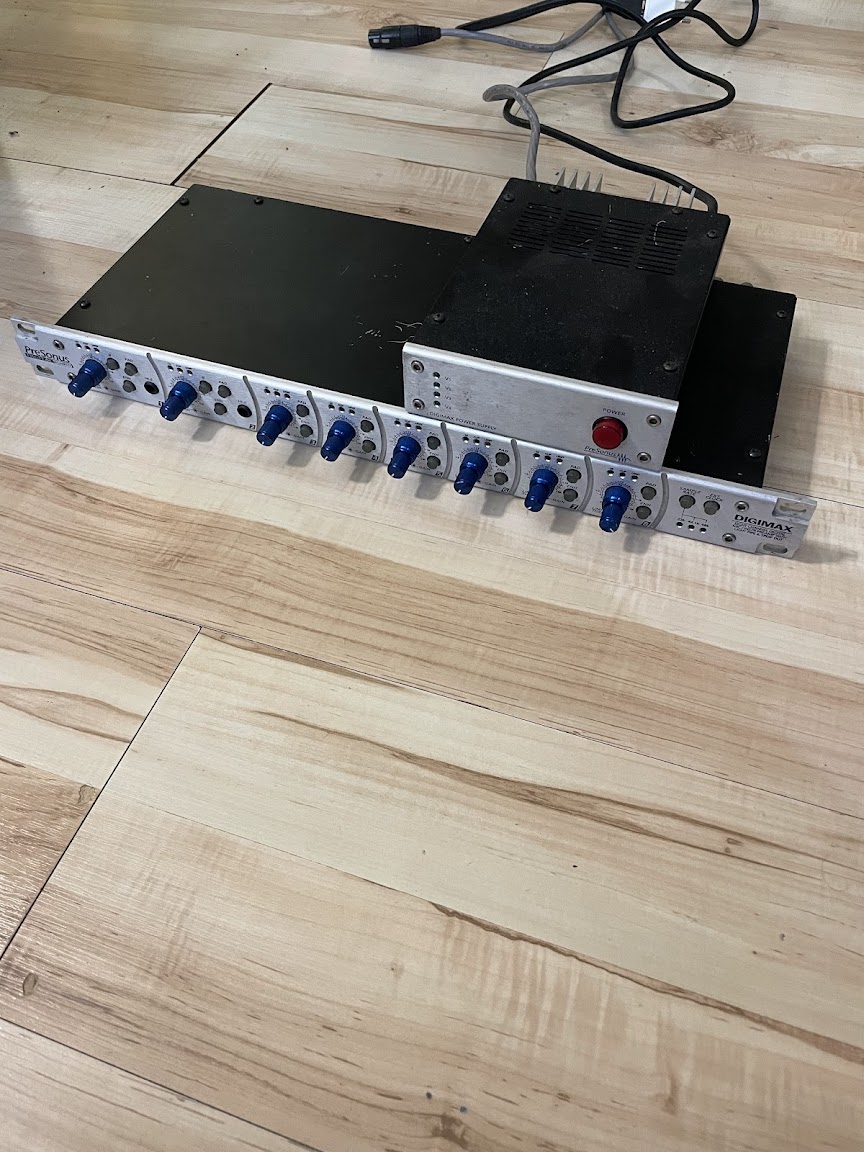
DBX 386 Microphone Preamp
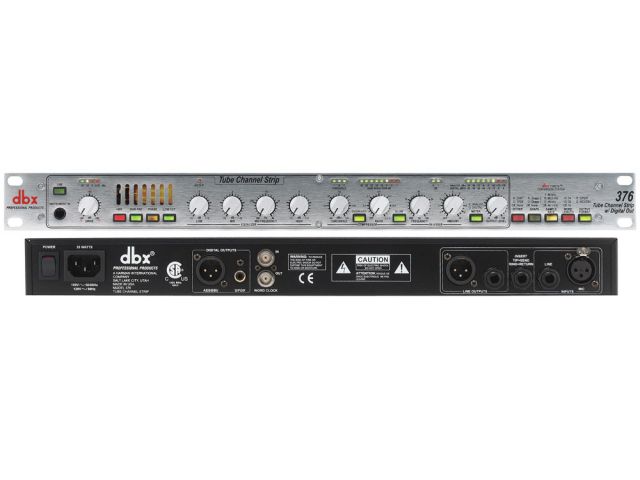
This is one of the latest developments from the company, which has entered the popular “silver” series. Like other devices in this series, the DBX 386 uses classic 12AU7 tubes, whose warm, even sound is well known in the music business. A distinctive feature of the new microphone preamp is the presence of a digital output stage with sampling frequencies of 44.1–96 kHz and a bit depth of 16-24 bits for direct connection to high-quality digital equipment.
The Type IV technology, on which the digital output of the dbx 386 is built, provides logarithmic representation of high levels when converting analog signals to digital, allowing to avoid unpleasant effects of digital overload, and using special algorithms simulates the effect of saturation of analog magnetic tape (TSE).
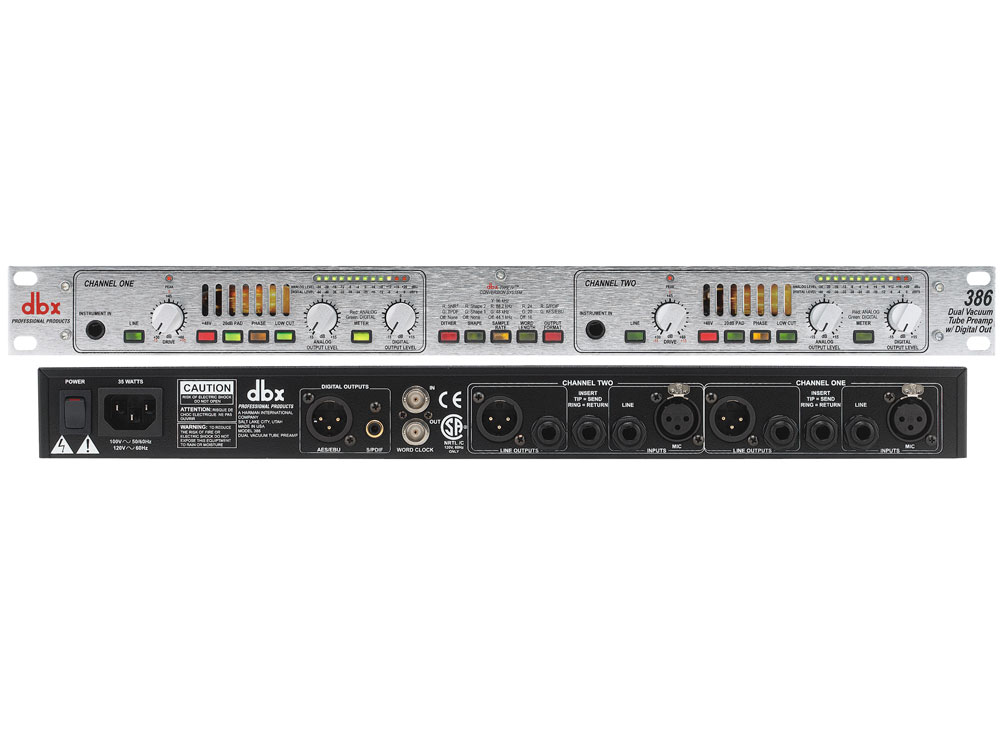
To improve the transmission of low-level signals, the dbx 386 uses various (user-selectable) dithering algorithms (dithering, TPDF, SNR2) and noise shaping (noise shaping, Shape 1, Shape 2). Overall, at the highest sampling frequency and bit depth of the digital signal today (96/24), the dbx 386 provides a “soft” sound characteristic of the best examples of tube technology.
A special high-impedance instrument input, whose connector is located directly on the front panel, as well as a sensitivity switch (mic/line) and a 20 dB attenuator (pad) for balanced and unbalanced inputs on the rear panel provide unparalleled flexibility in connectivity. 12-segment LED indicators with a selector allow visual monitoring of the signal level on analog inputs, as well as on analog and digital outputs. By the way, a separate level adjustment (+/-15 dB) is provided for the latter.
Each channel also includes the following adjustments: sensitivity from +0 dB to +60 dB for microphone signals, from -15 dB to +15 dB for line signals (Drive control), phase switch, low-cut filter (75 Hz 12 dB/octave), and +48 V phantom power switch.
Switching the sampling frequency, bit depth, dithering type, and noise shaping of the output digital signal is done using buttons (with corresponding indication) on the front panel.
Word Clock input and output (BNC connector) allows synchronization of the digital signal with both an external source and an internal clock generator.